
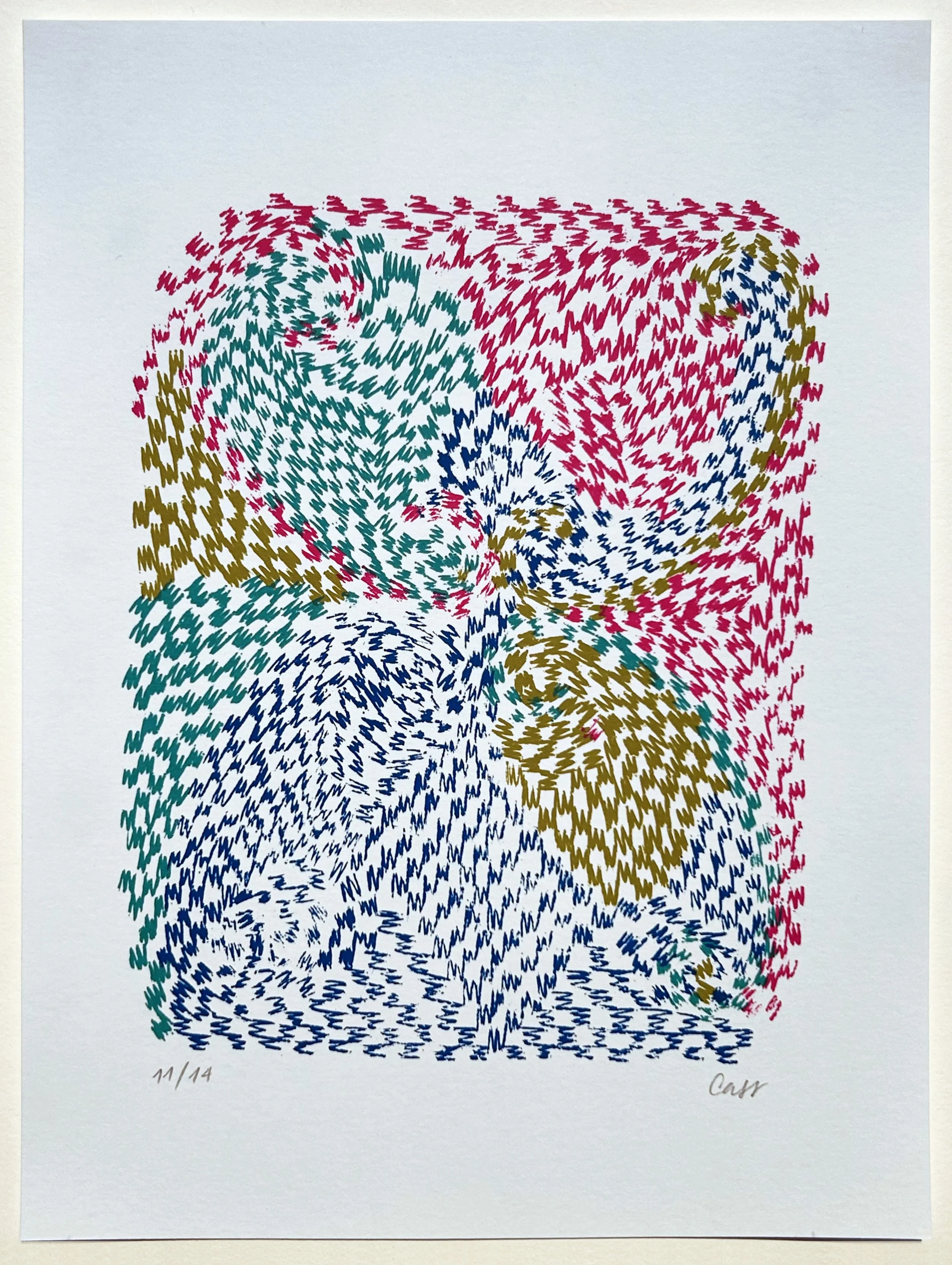
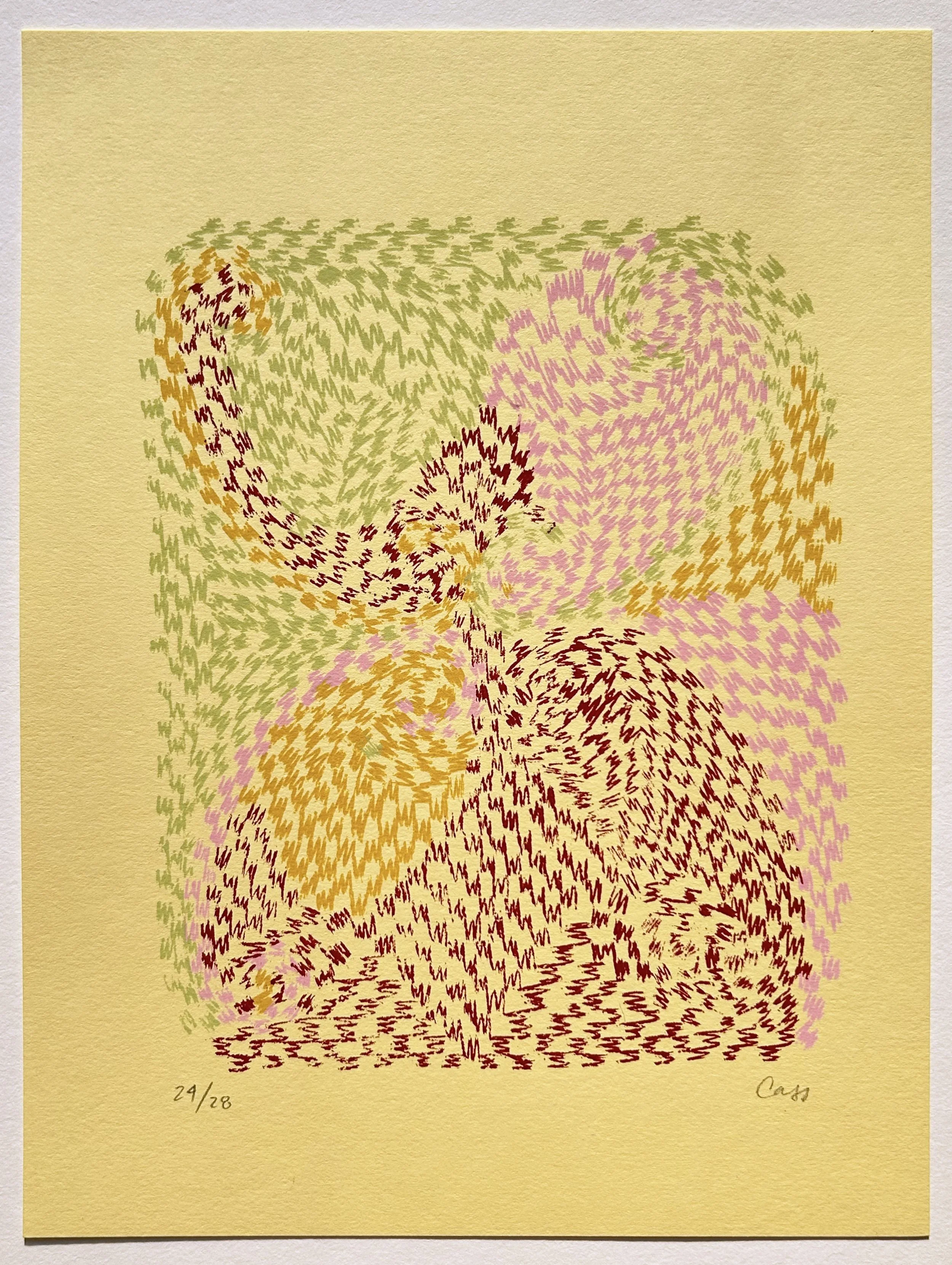
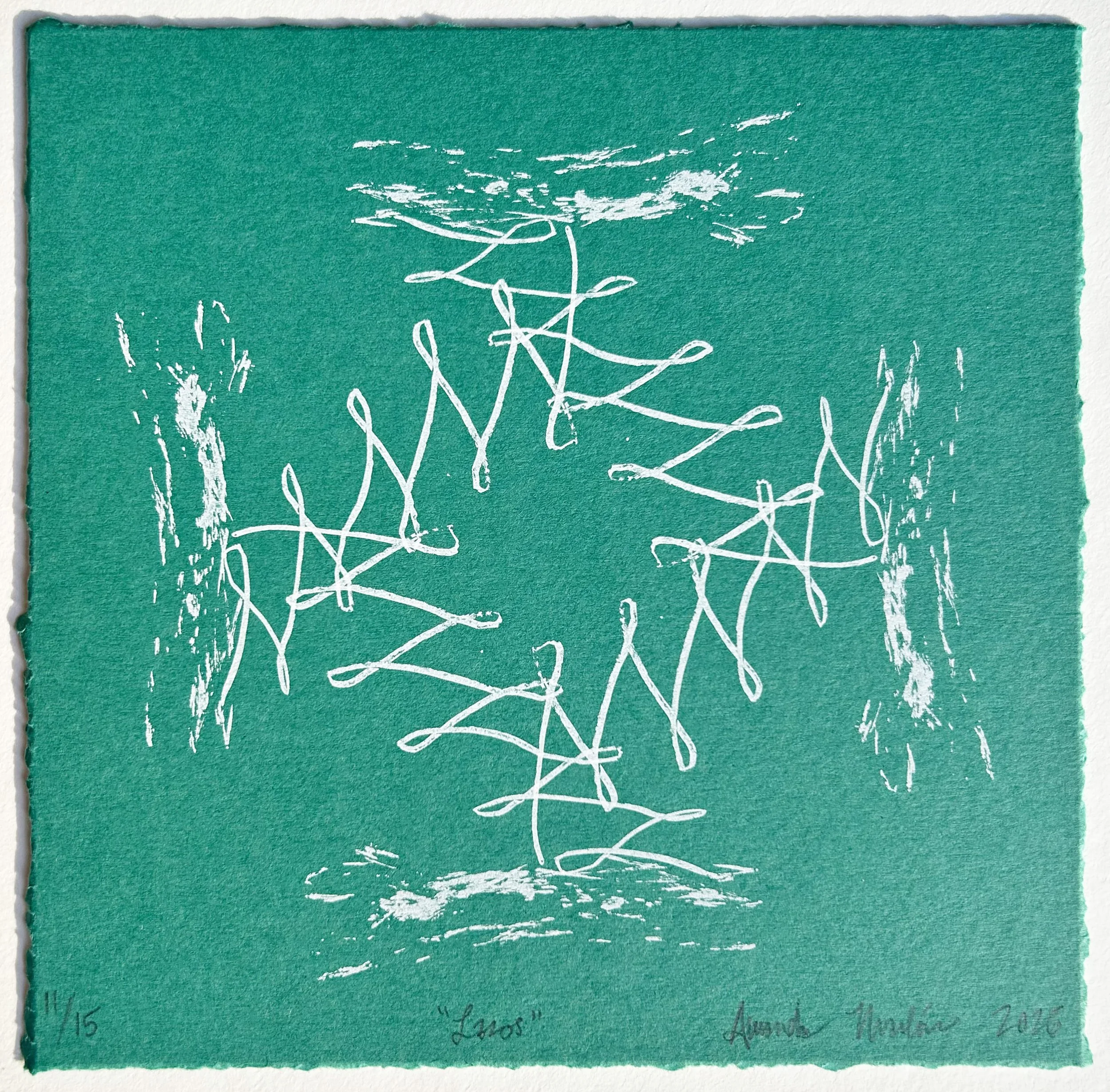
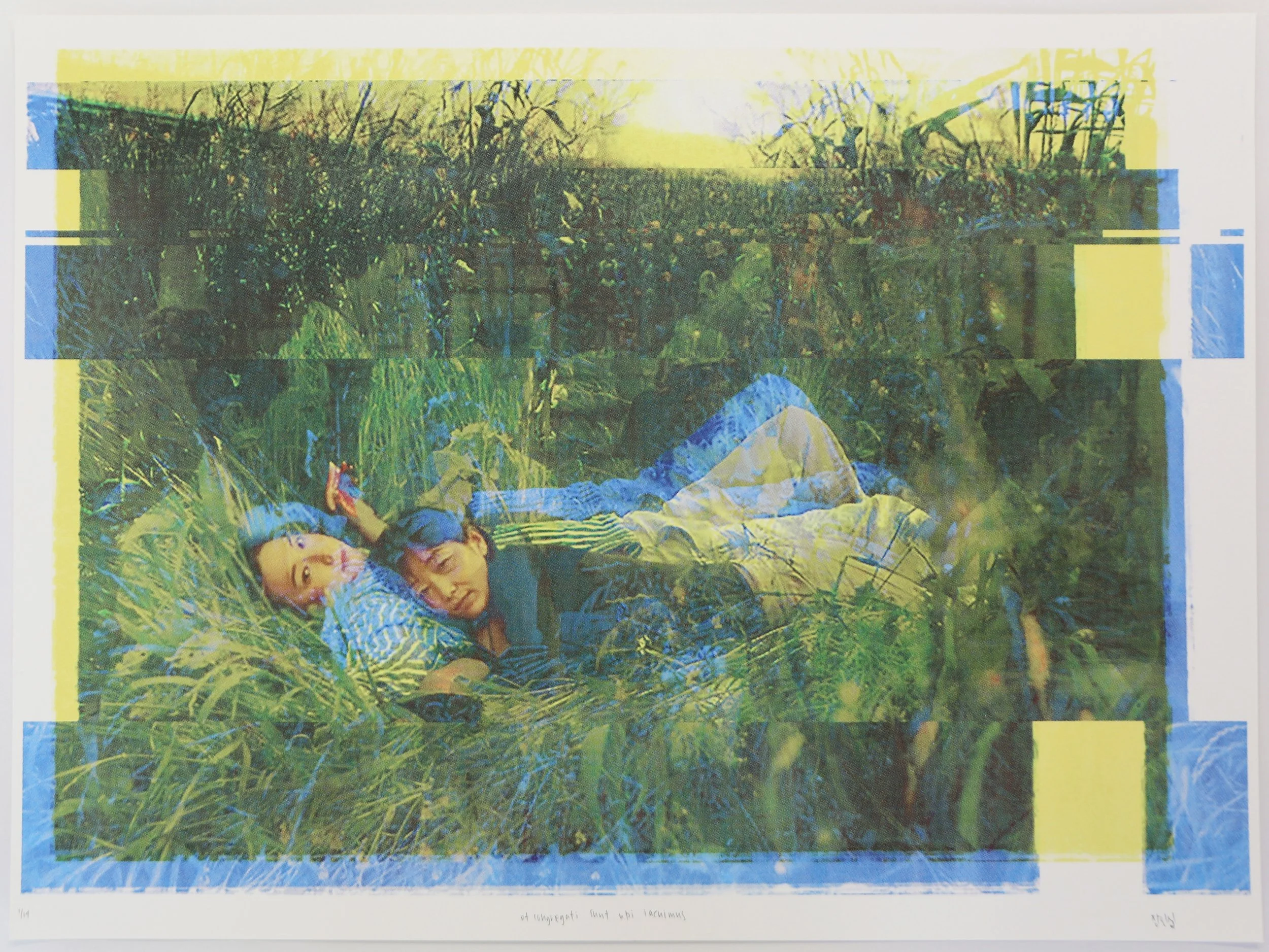


Transfer by Basie Allen & Mars Singleton
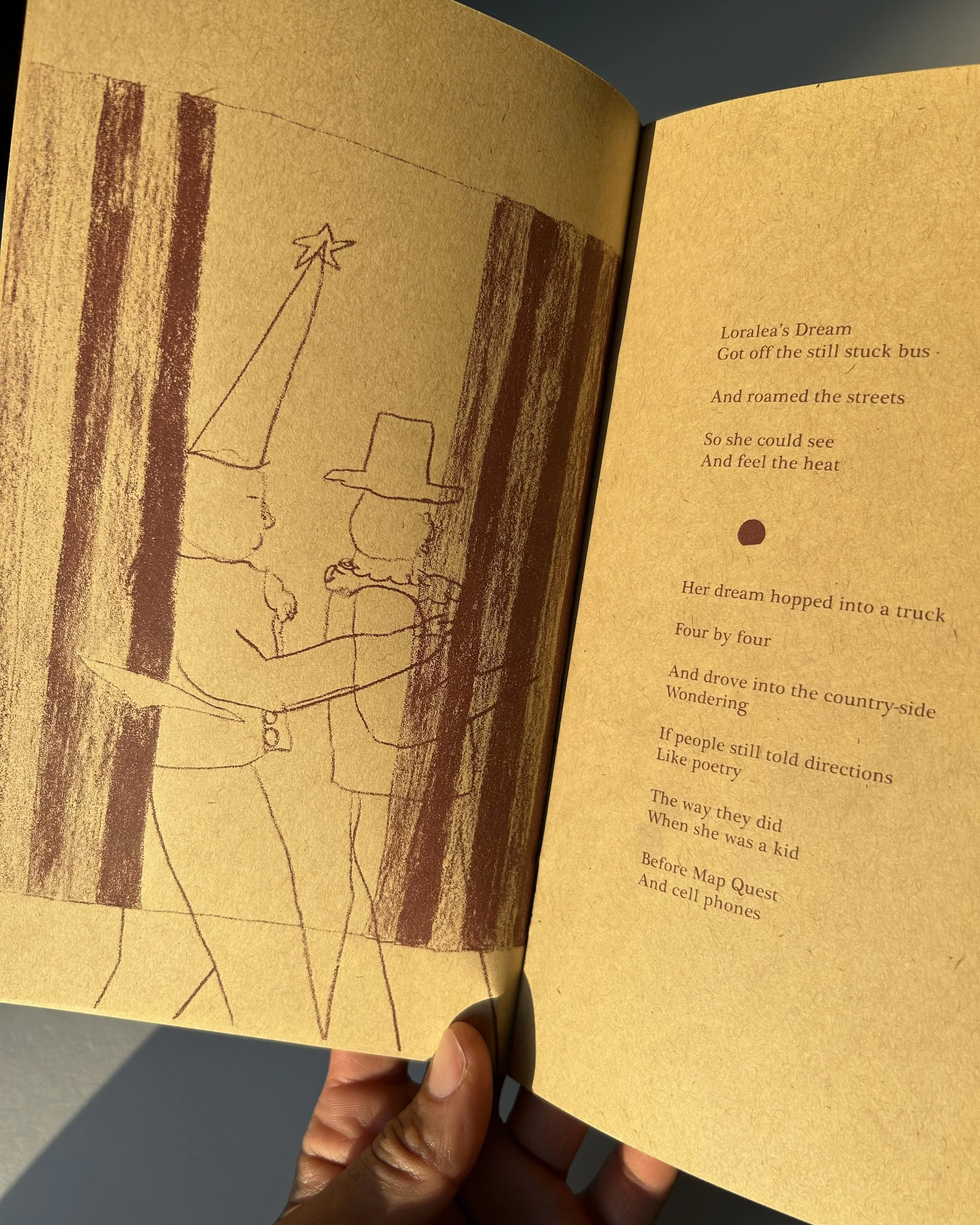
Transfer by Basie Allen & Mars Singleton
9 × 5.5 in | 40 page Artist’s Book
Paper bag Kraft-Tone French
Bound by Zane Morris
Edition: 100 | Du-Good Press, 2026
Inspired by the nature of public transportation
Basie and Mars sent each other fragments of new poems and drawings as they moved through the city– slowly.
The practice of sharing became its own commute
Weaving together the distance that follows…
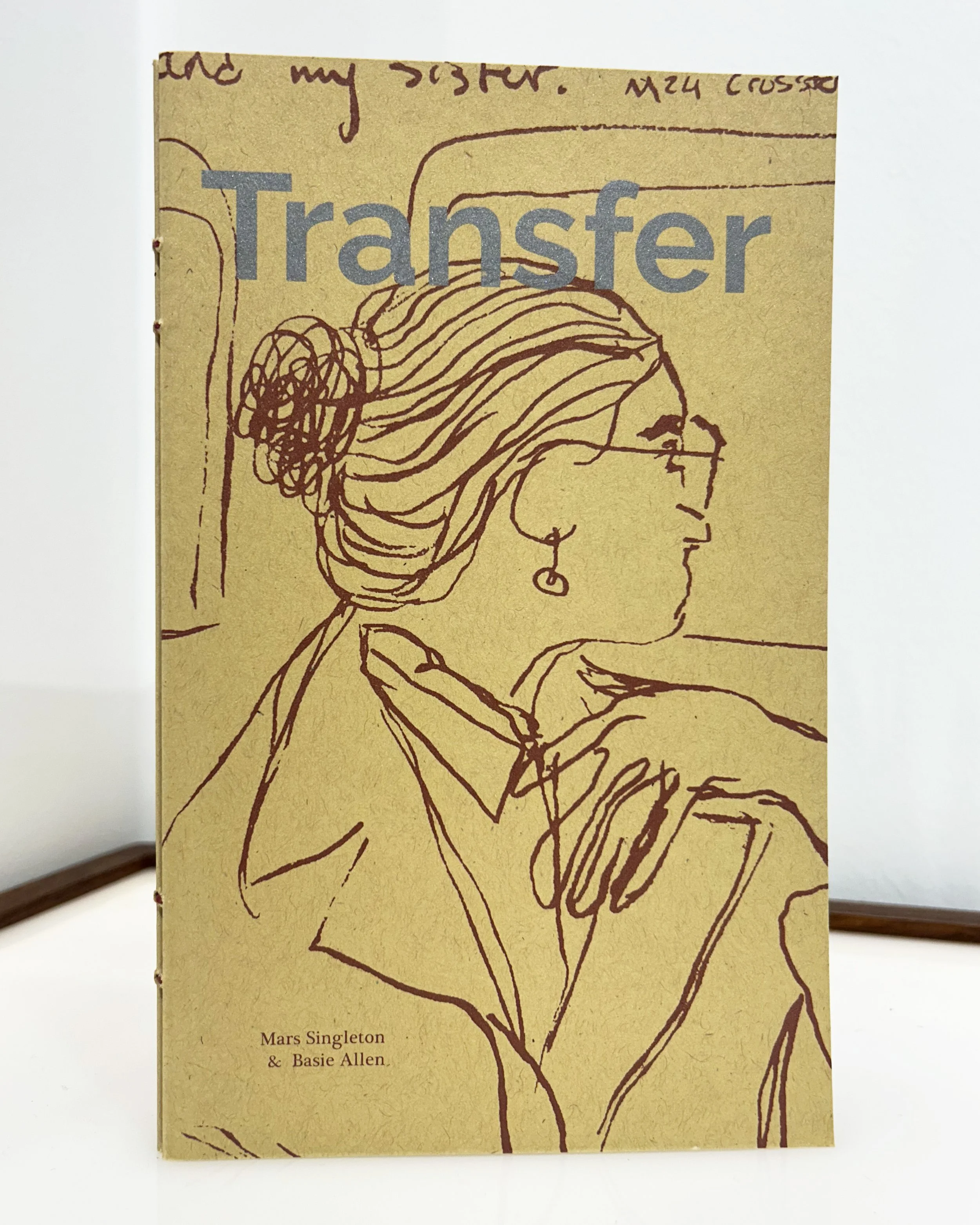
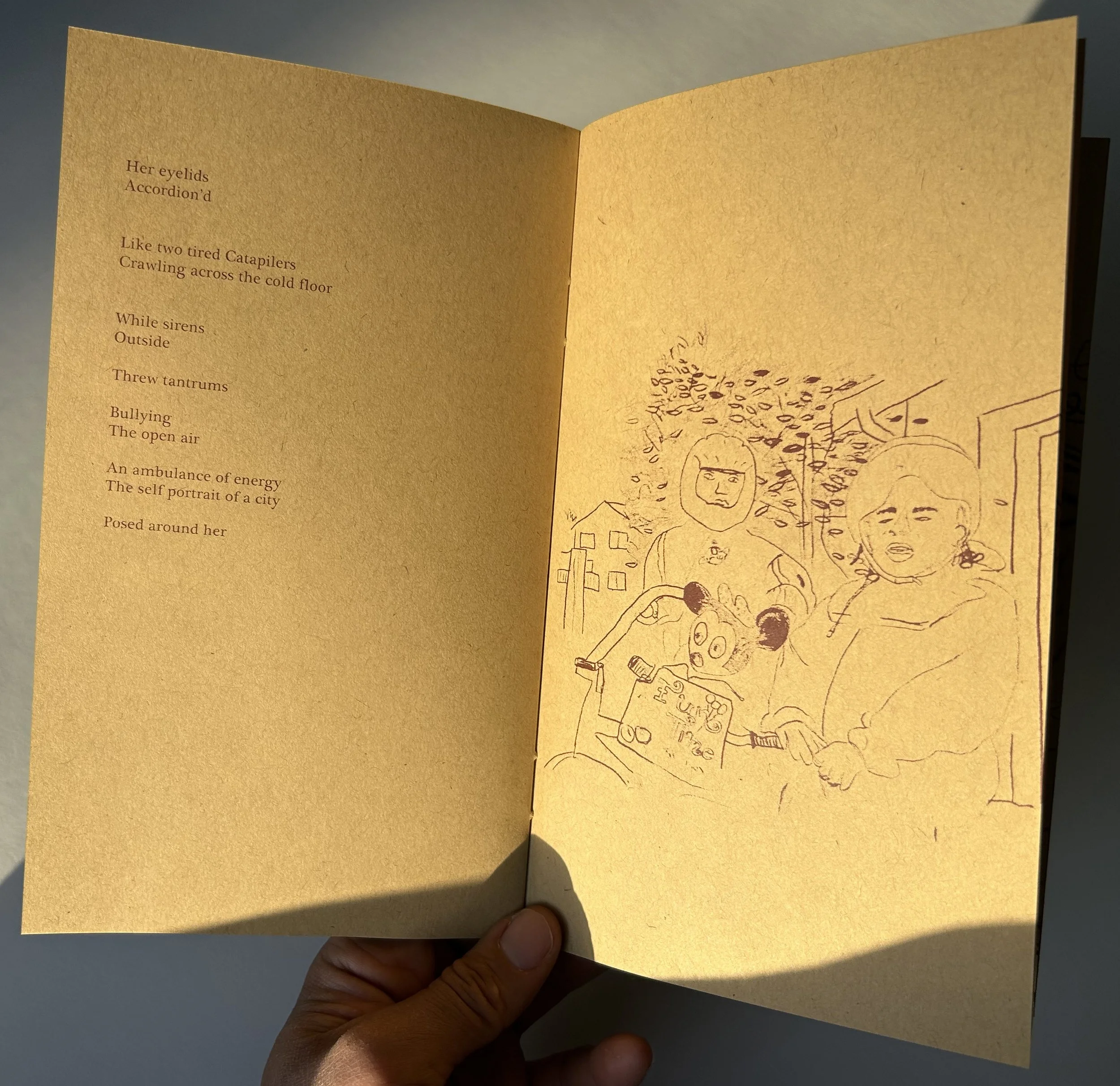
Transfer is a 40 page artist’s book that offers a poem about protagonist, Loralea’s dream riddled commute on a New York City bus. Delicate sketches cement the time spent in between places and nature of a mind wandering. Visually and linguistically, readers are taken through the sounds, smells and similes that zoom in on a profound and mundane daily trek.
Produced in an edition of 100 each book is made of two signatures hand bound with a staple stitch and maroon thread. The cover is a hand printed paperback with an interference red protective coating and aluminum silver text. Warm brown ink is screenprinted throughout on naturally textured Kraft-Tone French Paper.
Basie Allen (b. New York City. 1989.) uses poetry and painting to explore the softness in between living in cities and being in nature. In Allen’s painting process, he layers written text, décollage, and transfer, to experientially mimic the sensation of putting on boots and walking into a textured landscape. The work is accentuated by cultural and personal identity, memory, and gestural abstraction. Similarly, in his poetry practice, he layers the lyrical verse of his environment onto the page. The miasma of asphalt. The accumulation of human algae that builds up in the hidden corners of city life.
Mars Singleton’s (b. 1990) work blends personal narratives with broader societal observations, straddling the line between playfulness and seriousness. His work uses intuitive brushwork and unexpected colours to convey poignant observations about the world around him and the human condition. Singleton’s work often depicts moments from his own childhood and life, regularly featuring his younger self and family. His work highlights daily routines: his figures are seen chopping vegetables, chatting with friends, driving, and taking Zoom calls from the couch. Frequently depicting characters staring straight out of the canvas, Singleton’s work teleports the viewer into the midpoint of a conversation or scene, drawing them into the role of interlocutor. The viewer is instantly transported by Singleton’s works, perhaps hearing voices from the kitchen or standing astride their own bike. Singleton’s works reference his own personal history as well as queerness within the history of black America and then depart, soaring into singular moments and serving to host spirits in the canvas.