


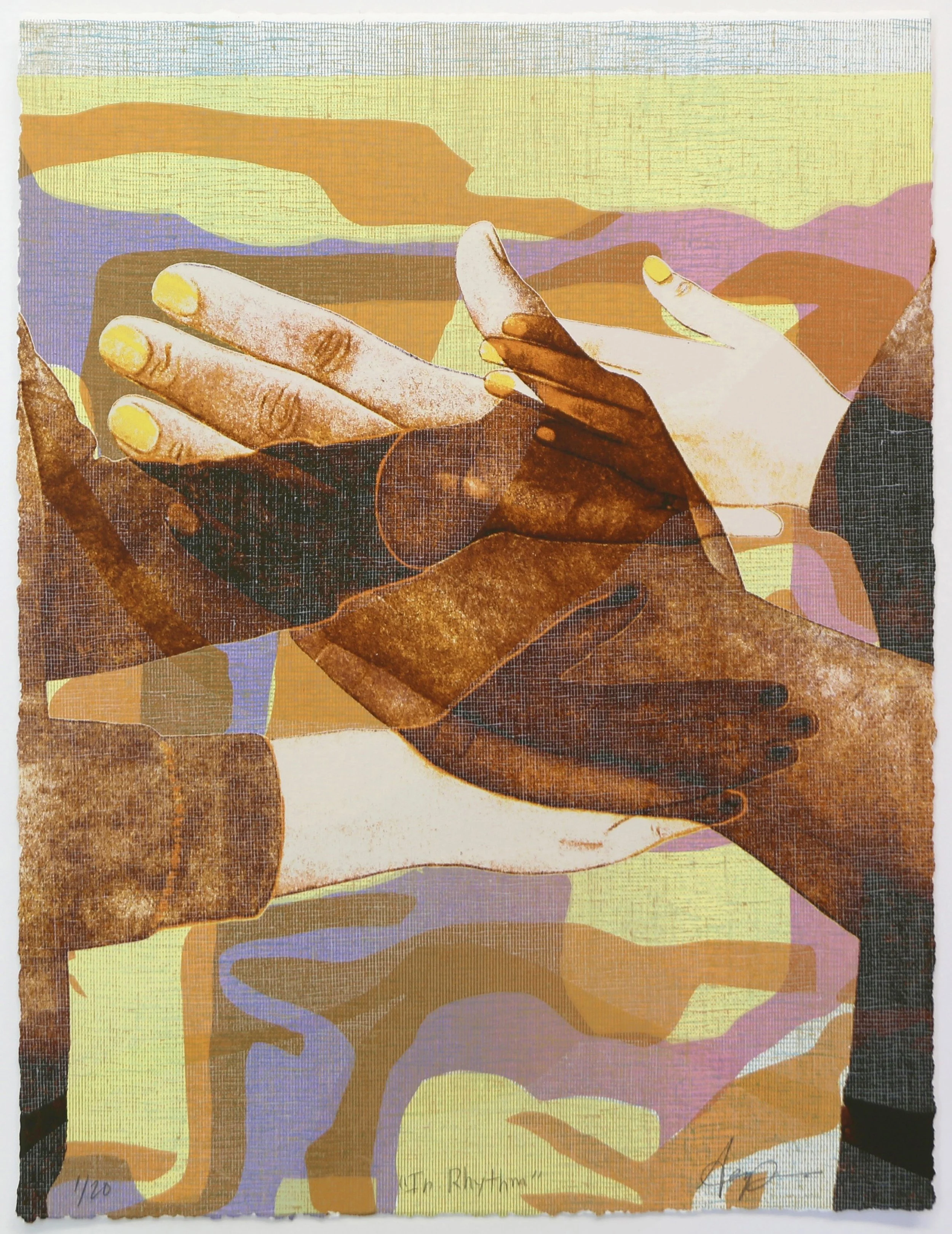
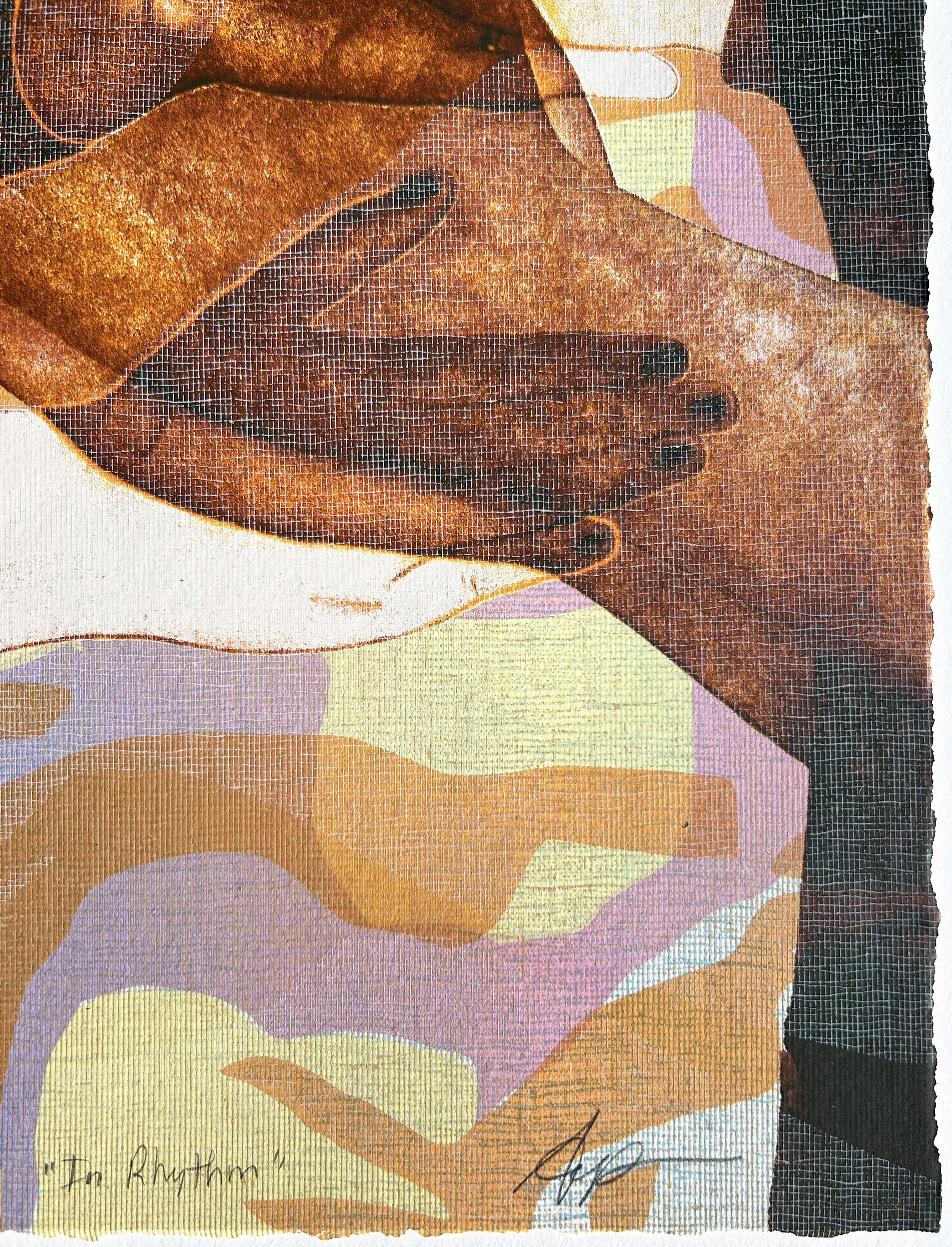
In Rhythm by Angela Pilgrim
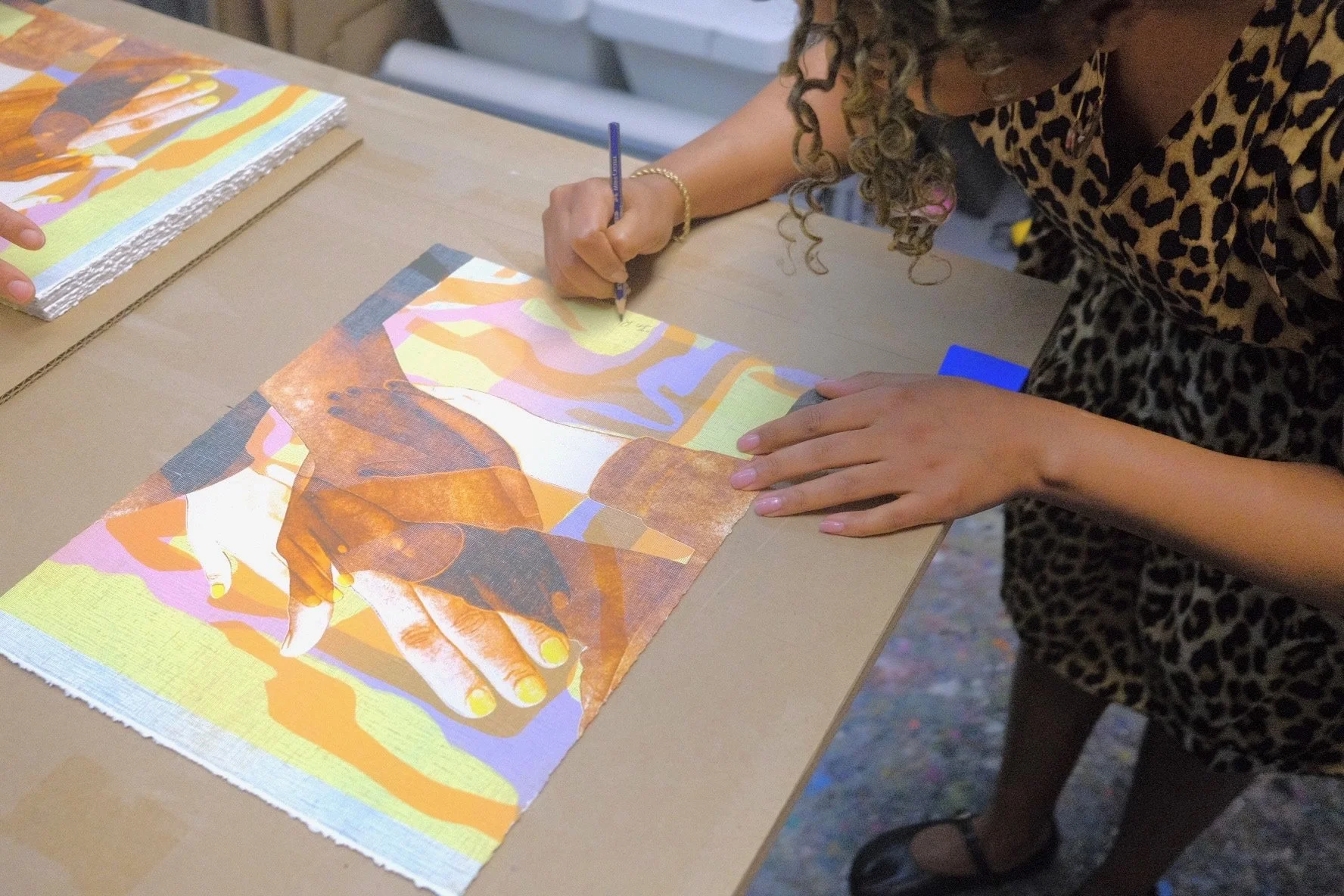
In Rhythm by Angela Pilgrim
19 × 13 in | 14 Color Screenprint
320 gsm Coventry Rag with Deckled Edge
Edition: 20 | Du-Good Press, 2026
In Rhythm engages the hand clapping game as a site of cultural transmission, collective memory, and embodied knowledge within the African diaspora. The work centers the hands overlapping, mid-motion, caught in the gesture of play as vessels of a tradition that predates written record. Tracing back to West African ludic practices such as Ampe, the hand game has always lived in the body passed hand to hand, generation to generation, across geographies and time. The compositional layering mirrors the structure of oral-kinetic tradition itself: forms accumulate, interrupt, and echo one another across the picture plane, much as each generation inherits and revises what was passed to them.
Ethnomusicologist Kyra D. Gaunt has theorized these game-songs through the framework of kinetic orality, the conjunction of orality and embodied language and meaning in Black musical discourse. This work treats the clapping gesture not as childhood ephemera but as scholarship conducted outside institutional walls.
In Rhythm positions Black girlhood not at the margins of cultural history but at its generative center as the place where rhythm was kept, where community was rehearsed, and where the diaspora continued to recognize itself.
Angela Pilgrim (b. 1991, New Jersey) lives and works in Newark, New Jersey. Working primarily in printmaking and mixed media, Pilgrim builds meaning through layering — accumulating mark, pattern, and material to examine Black subjectivity through the Black female gaze. Her practice moves across portraiture, pattern-making, and process-driven composition to explore constructions of beauty, spirituality, and the dynamics of desire, vulnerability, and power within Black diasporic identities. Drawing from the histories and visual languages of the African diaspora, she threads inherited traditions through contemporary material approaches and the expressed knowledge of Black womanhood. By centering the Black body as both subject and author, her work cultivates new modes of seeing and being seen, reframing Black presence as self-defined, nuanced, and expansive.